A perforated eardrum is a common ear condition that occurs when a hole or tear develops in the thin membrane separating the outer ear from the middle ear. While some cases heal naturally, others can lead to hearing difficulties, recurring infections, and long-term ear problems if left untreated.
Recognizing perforated eardrum symptoms early is important because prompt medical evaluation can help prevent complications and improve recovery outcomes. The symptoms can vary depending on the size of the perforation, the underlying cause, and whether an infection is present.
This guide explains the most common warning signs, how eardrum perforations affect hearing, and when you should seek help from an ENT specialist.
What Is a Perforated Eardrum and Why Do Symptoms Occur?
The eardrum plays an important role in both hearing and ear protection. When it becomes damaged, normal ear function can be disrupted, resulting in a variety of symptoms.
Understanding how a perforation develops can make it easier to recognize the warning signs and seek timely treatment.
Understanding Eardrum Perforation
Before discussing the signs and symptoms of perforated eardrum, it is helpful to understand what happens when the eardrum tears.
A perforated eardrum occurs when the tympanic membrane develops a hole or rupture due to:
- Ear infections
- Trauma
- Sudden pressure changes
- Loud noise exposure
- Foreign object injuries
The eardrum normally acts as a protective barrier and helps transmit sound vibrations to the middle ear. When damaged, these functions become less effective.
The severity of symptoms often depends on the size and location of the perforation.
How a Torn Eardrum Affects Hearing
The eardrum is essential for normal hearing because it converts sound waves into vibrations that travel through the middle ear.
A tear may cause:
- Reduced sound transmission
- Muffled hearing
- Difficulty understanding speech
- Distorted sounds
Larger perforations generally cause greater hearing impairment than smaller tears.
Many patients notice hearing changes shortly after the injury occurs, making hearing loss one of the earliest warning signs.
When Symptoms Begin to Appear
The timing of symptoms varies depending on the cause of the perforation.
Symptoms may develop:
- Immediately after trauma
- During an ear infection
- Following sudden pressure changes
- Gradually as complications develop
Patients wondering what are the symptoms of a perforated eardrum should know that symptoms often appear suddenly and may range from mild discomfort to significant hearing difficulties.
Prompt evaluation can help determine the severity of the injury and guide treatment.
Common Symptoms of a Perforated Eardrum
Although symptom severity varies, several warning signs occur frequently in patients with eardrum perforations. Recognizing these symptoms can help ensure early diagnosis and treatment.
Many of these symptoms may occur alone or in combination.
Sudden Ear Pain and Discomfort
One of the most common signs of perforated eardrum is sudden ear pain.
The pain may be:
- Sharp
- Severe
- Brief
- Persistent
- Accompanied by pressure changes
In some cases, pain improves immediately after the eardrum ruptures because built-up pressure behind the membrane is released.
However, ongoing perforated eardrum pain should never be ignored, particularly if it is accompanied by discharge or hearing loss.
Hearing Loss or Muffled Hearing
Hearing changes are among the most frequently reported symptoms following eardrum perforation.
Patients may experience:
- Reduced hearing sensitivity
- Muffled sounds
- Difficulty hearing conversations
- Hearing fluctuations
- Temporary hearing loss
The degree of hearing impairment depends on the size of the perforation and whether additional middle ear damage is present.
Hearing difficulties often improve as the eardrum heals, although some patients require medical intervention.
Ringing, Dizziness, and Balance Problems
Because the ear plays a critical role in balance, some individuals develop additional symptoms beyond hearing loss.
These may include:
- Ringing in the ears (tinnitus)
- Dizziness
- Vertigo
- Balance disturbances
- Motion sensitivity
These symptoms can occur when the injury affects structures beyond the eardrum itself.
Patients experiencing severe dizziness should seek prompt medical attention.
Less Common Warning Signs to Watch For
While pain and hearing loss are the most recognized symptoms, several less common signs may also indicate a perforated eardrum.
These symptoms are particularly important because they may suggest infection or complications requiring treatment.
Fluid or Blood Drainage From the Ear
One of the more noticeable symptoms of perforated eardrum in adults is abnormal ear drainage.
Possible discharge may include:
- Clear fluid
- Yellow fluid
- Pus
- Blood-stained drainage
Perforated eardrum discharge often occurs when an infection or injury has caused the rupture.
Persistent drainage should always be evaluated by an ENT specialist because it may indicate ongoing middle ear disease.
The presence of blood is particularly important to investigate following trauma.
Ear Fullness and Pressure Sensation
Some patients report unusual sensations within the affected ear even when pain is minimal.
Common complaints include:
- Ear fullness
- Pressure changes
- Blocked ear sensation
- Popping sounds
- Temporary discomfort
These symptoms may occur because the damaged eardrum no longer regulates pressure normally between the outer and middle ear.
Although not always severe, persistent fullness should be assessed professionally.
Recurring Ear Infections
The eardrum serves as a protective barrier that helps prevent bacteria from entering the middle ear.
When a perforation is present, the risk of infection increases.
Signs of recurring infection include:
- Repeated ear pain
- Ongoing discharge
- Fever
- Hearing changes
- Ear irritation
Frequent infections may delay healing and increase the likelihood of requiring more advanced treatment.
Early management often improves recovery outcomes.
When Should You Visit an ENT Specialist?
Although some perforations heal naturally within several weeks, professional evaluation is important whenever symptoms suggest significant injury or complications.
An ENT specialist can determine the extent of damage and recommend appropriate treatment.
Symptoms That Require Immediate Attention
Certain symptoms should never be ignored because they may indicate serious ear injury or infection.
Seek urgent medical evaluation if you experience:
- Severe hearing loss
- Significant bleeding
- Persistent dizziness
- Facial weakness
- High fever
- Severe ear pain
These symptoms may require immediate intervention to prevent long-term complications.
Prompt diagnosis is especially important following trauma or sudden pressure-related injuries.
Diagnosis and Ear Examination
ENT specialists use several methods to confirm an eardrum perforation and assess its severity.
The evaluation may include:
- Medical history review
- Ear examination with an otoscope
- Microscopic ear assessment
- Hearing tests
- Tympanometry
These diagnostic tools help determine the size of the perforation and whether additional structures have been affected.
Accurate diagnosis guides treatment decisions and recovery planning.
Treatment Options Based on Severity
Treatment depends on the size of the perforation, symptoms, and presence of infection.
Common management options include:
- Observation for natural healing
- Antibiotic ear drops
- Infection treatment
- Eardrum patch procedures
- Surgical repair when necessary
Many small perforations heal without surgery. However, larger tears or persistent perforations may require specialized ENT treatment.
Early medical care often improves healing rates and hearing outcomes.
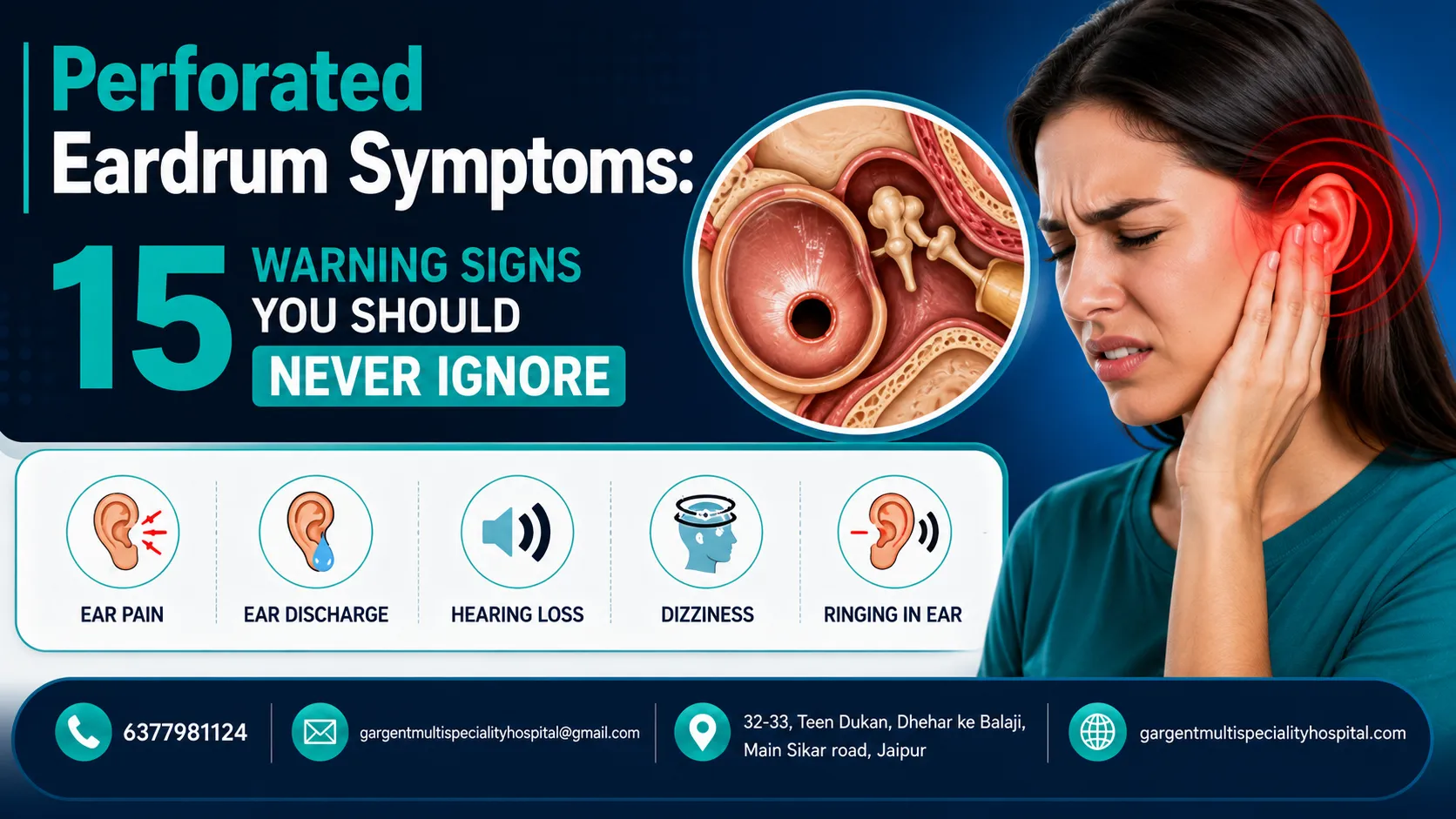
15 Warning Signs of a Perforated Eardrum
For quick reference, the most important warning signs include:
- Sudden ear pain
- Sharp ear discomfort
- Muffled hearing
- Partial hearing loss
- Ringing in the ears
- Dizziness
- Vertigo
- Balance problems
- Ear discharge
- Blood from the ear
- Ear fullness
- Pressure sensation
- Recurrent ear infections
- Sensitivity to sound
- Difficulty hearing conversations
If you experience several of these symptoms together, professional evaluation is recommended.
Conclusion
Recognizing perforated eardrum symptoms early can help prevent complications and support faster recovery. While many perforations heal naturally, symptoms such as hearing loss, ear discharge, dizziness, and persistent pain should never be ignored.
Understanding the warning signs allows patients to seek timely ENT evaluation and receive appropriate treatment. Whether the perforation results from infection, trauma, or pressure changes, early diagnosis plays a key role in preserving hearing and maintaining long-term ear health.
At Garg ENT & Multispeciality Hospital, experienced ENT specialists provide comprehensive diagnosis and advanced treatment options for eardrum injuries, helping patients recover safely and effectively.
FAQs
1. What are the symptoms of a perforated eardrum?
Common symptoms include ear pain, hearing loss, ringing in the ears, dizziness, ear discharge, and a feeling of fullness in the ear.
2. Can a perforated eardrum heal on its own?
Yes. Many small perforations heal naturally within a few weeks, although larger tears may require medical treatment.
3. Is hearing loss common with a perforated eardrum?
Yes. Temporary hearing loss or muffled hearing is one of the most common symptoms associated with eardrum perforation.
4. What causes fluid drainage from a perforated eardrum?
Drainage may occur due to infection, inflammation, or trauma that causes the eardrum to rupture.
5. When should I see an ENT specialist for a perforated eardrum?
You should seek medical evaluation if symptoms include severe pain, hearing loss, persistent discharge, dizziness, or signs of infection.