Hearing plays a vital role in communication, learning, and overall quality of life. However, many people ignore early signs of hearing loss until it begins affecting daily activities. An audiometry test is one of the most effective diagnostic tools used to assess hearing ability and identify hearing-related disorders. Whether a person experiences difficulty understanding conversations, ringing in the ears, or reduced hearing sensitivity, timely evaluation can help prevent further complications.
With increasing exposure to noise pollution, headphones, workplace noise, and age-related hearing issues, hearing assessments have become more important than ever. Understanding how hearing tests work, what they measure, and how to interpret the findings can help patients make informed healthcare decisions.
What Is an Audiometry Test and Why Is It Important?
Hearing problems can develop gradually, making them difficult to detect without professional assessment. An audiometry test helps healthcare professionals evaluate hearing sensitivity and determine whether hearing loss is present. The test measures how well a person can hear sounds of different frequencies and volumes, allowing specialists to identify the type and severity of hearing impairment.
Early detection of hearing issues improves treatment outcomes and helps maintain better communication abilities. For children, adults, and seniors alike, hearing evaluation is an important part of preventive healthcare.
Audiometry Test Meaning Explained
Many patients search for the audiometry meaning before scheduling a hearing assessment. Audiometry refers to the scientific measurement of hearing ability. It evaluates how effectively an individual can hear speech, tones, and various sound frequencies.
The purpose of the test is to determine:
- Hearing threshold levels
- Degree of hearing loss
- Type of hearing impairment
- Need for further treatment
Understanding the what is audiometry test concept can reduce anxiety and help patients prepare for the examination process.
Who Should Get a Hearing Test?
Hearing assessments are recommended for individuals of all age groups when symptoms or risk factors are present. Certain professions and medical conditions increase the likelihood of hearing-related problems.
People who should consider testing include:
- Individuals exposed to loud workplace noise
- Older adults
- People with recurring ear infections
- Patients experiencing tinnitus
- Individuals with family history of hearing loss
- Children with delayed speech development
Regular monitoring helps detect hearing changes before they significantly impact daily life.
Signs You May Need Audiometry
Hearing loss often develops gradually. Many people adapt to changes without realizing their hearing has declined.
Common warning signs include:
- Frequently asking others to repeat themselves
- Difficulty understanding conversations
- Increasing television volume
- Ringing sounds in the ears
- Trouble hearing in crowded environments
- Missing phone calls or alarms
When these symptoms appear, scheduling an audiometry test can help identify the underlying cause and guide appropriate treatment.
Types of Audiometry Tests Used for Hearing Evaluation
Modern hearing assessment involves different testing methods depending on the patient’s symptoms and clinical requirements. Healthcare professionals may use one or multiple evaluations to obtain a complete picture of hearing health. Each test serves a specific purpose and helps determine how sound travels through different parts of the auditory system.
Pure Tone Audiometry (PTA)
Pure Tone Audiometry is the most commonly performed hearing assessment. During this evaluation, patients wear headphones and respond whenever they hear tones at different frequencies and volumes.
The test helps determine:
- Hearing threshold levels
- Degree of hearing loss
- Hearing sensitivity in each ear
Pure Tone Audiometry is widely used because it provides accurate information regarding hearing function and assists specialists in planning treatment strategies.
Speech Audiometry
Speech Audiometry measures the ability to hear and understand spoken words. Unlike tone-based testing, this assessment focuses on real-world communication skills.
The evaluation helps determine:
- Speech recognition ability
- Clarity of hearing
- Communication difficulties
This assessment is particularly useful when patients report difficulty understanding conversations despite hearing sounds adequately.
Impedance Audiometry
Impedance Audiometry evaluates middle ear function by measuring how the eardrum responds to changes in air pressure.
The test is commonly used to identify:
- Fluid in the middle ear
- Eardrum abnormalities
- Eustachian tube dysfunction
- Conductive hearing loss
When combined with other hearing evaluations, it provides a comprehensive understanding of auditory health and potential medical concerns.
Audiometry Test Procedure Step by Step
Many patients feel nervous before a hearing assessment because they are unfamiliar with the process. Understanding the audiometry test procedure helps eliminate uncertainty and allows individuals to approach the evaluation with confidence. The procedure is painless, non-invasive, and generally requires minimal preparation.
Preparation Before the Test
Proper preparation contributes to accurate results. Most patients can continue their normal activities before the examination.
Helpful preparation steps include:
- Avoid loud noise exposure before testing
- Inform the doctor about medications
- Share previous hearing records
- Report ear infections or ear pain
- Arrive a few minutes early
These simple measures help healthcare professionals obtain reliable hearing measurements.
How the Test Is Performed
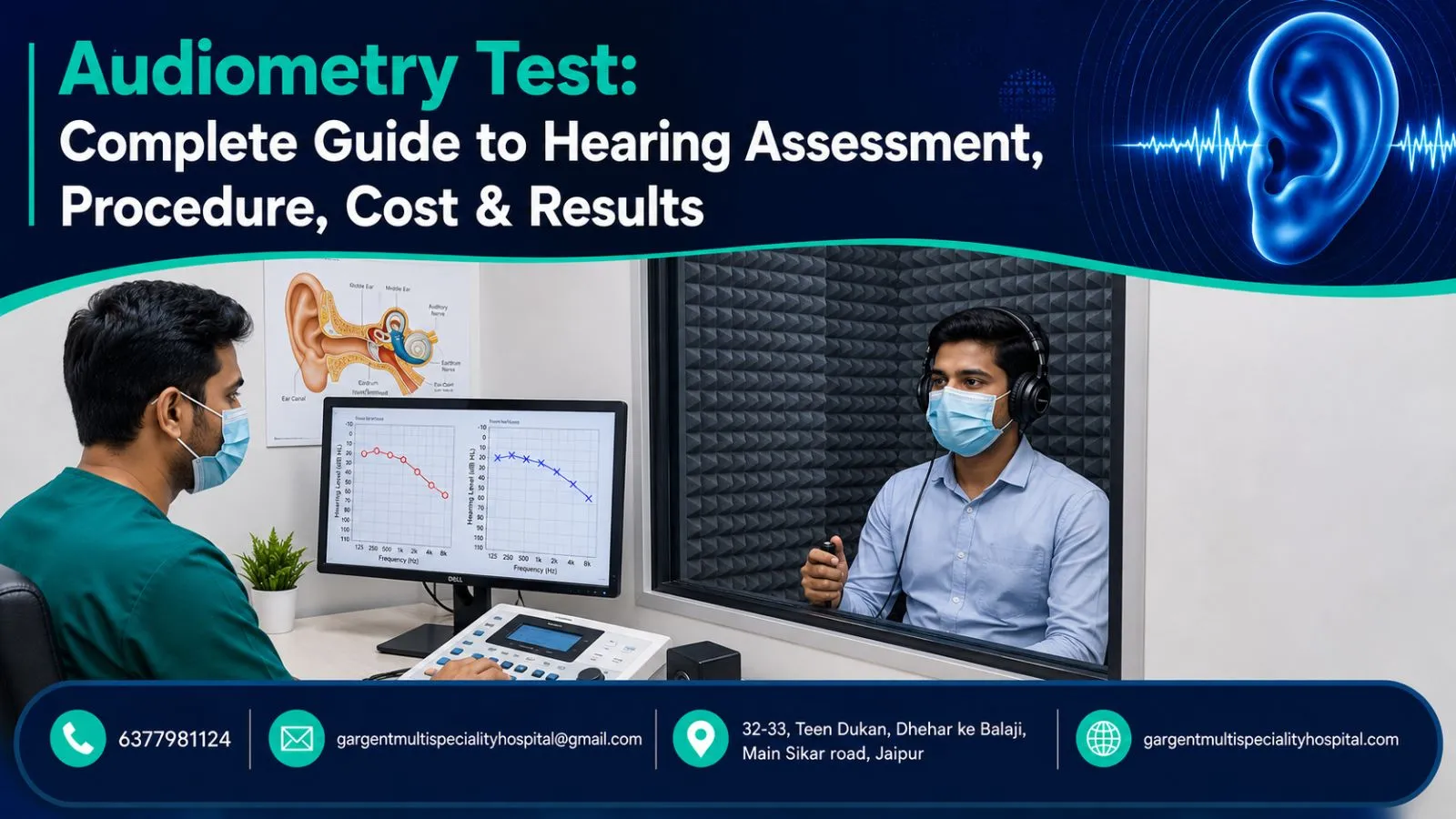
The audiometry test procedure typically begins with a discussion of symptoms and medical history. Patients are then guided into a quiet testing room where specialized equipment is used.
The process usually includes:
- Wearing headphones
- Listening to tones
- Responding to sounds
- Speech recognition evaluation
- Additional middle ear testing if required
The audiologist records responses and analyzes hearing thresholds to identify any abnormalities.
Duration and Patient Experience
Most hearing assessments are completed within 20 to 45 minutes depending on the complexity of the evaluation. The process is comfortable and does not involve needles, injections, or surgical procedures.
Patients generally experience:
- No pain
- Minimal discomfort
- Clear instructions
- Immediate completion
Because the procedure is straightforward, individuals can resume normal activities immediately after the examination.
Understanding Audiometry Test Results and Reports
Receiving hearing assessment findings can sometimes feel confusing due to medical terminology and graphs. Understanding an audiometry test report allows patients to better discuss results with healthcare providers and participate in treatment decisions. Accurate interpretation helps determine whether hearing is normal or if additional evaluation and management are necessary.
Normal Hearing Range
One of the most common patient concerns involves understanding the audiometry test normal range. Hearing thresholds are measured in decibels (dB), which indicate the softest sounds a person can detect.
Generally accepted hearing levels include:
- Normal: 0–25 dB
- Mild loss: 26–40 dB
- Moderate loss: 41–55 dB
- Severe loss: Above 70 dB
Healthcare providers use these ranges to classify hearing ability and determine treatment recommendations.
Reading an Audiometry Report
An audiometry test report typically contains graphs, hearing thresholds, and clinical observations. These findings help specialists identify the severity and type of hearing impairment.
Key components often include:
- Hearing threshold chart
- Frequency measurements
- Speech recognition scores
- Diagnostic interpretation
- Clinical recommendations
Understanding these sections allows patients to gain better insight into their hearing health.
When to Consult an ENT Specialist
After reviewing audiometry test results, an ENT specialist may recommend additional evaluation or treatment if abnormalities are detected.
Medical consultation is important when:
- Hearing loss is identified
- Symptoms worsen over time
- Ear pain accompanies hearing issues
- Tinnitus becomes persistent
- Balance problems develop
Prompt medical attention helps prevent complications and improves long-term hearing outcomes.
Modern hearing care relies heavily on accurate diagnostic assessments. An audiometry test provides valuable information about hearing sensitivity, speech understanding, and overall auditory function. Early diagnosis can help identify hearing loss before it significantly affects communication and daily life.
For individuals experiencing hearing difficulties, professional evaluation remains the most reliable approach. Understanding what is audiometry test, interpreting audiometry test results, and reviewing an audiometry test report with an ENT specialist can support timely treatment and better hearing health outcomes.
FAQs
1. What is an audiometry test?
An audiometry test is a hearing assessment used to measure hearing ability, detect hearing loss, and evaluate overall auditory function.
2. Is the audiometry test painful?
No. The procedure is completely painless, non-invasive, and safe for patients of all ages.
3. How long does an audiometry test take?
Most hearing evaluations are completed within 20 to 45 minutes depending on the tests being performed.
4. What is the normal range in an audiometry test?
The audiometry test normal range is generally considered between 0 and 25 decibels, indicating normal hearing sensitivity.
5. Who should undergo an audiometry test?
Individuals experiencing hearing difficulties, tinnitus, frequent ear infections, age-related hearing concerns, or workplace noise exposure should consider hearing assessment.