Brain tumor surgery is a specialized procedure performed to remove abnormal growths from the brain while preserving important neurological functions such as vision, speech, memory, and movement. Brain tumors can significantly affect a person’s quality of life and may lead to serious complications if left untreated. Therefore, early diagnosis and timely treatment are essential for achieving the best possible outcomes.
Traditionally, brain tumors were treated through open brain surgery, also known as craniotomy, which required creating an opening in the skull. While effective, this method often involved a longer recovery period and greater surgical trauma. With advancements in medical technology, minimally invasive techniques have transformed the way many brain tumors are treated today.
Modern procedures such as Endoscopic Brain Tumor Removal, Brain Surgery Through the Nose, and Endoscopic Skull Base Surgery allow surgeons to access tumors with remarkable precision while minimizing damage to surrounding tissues. These techniques are especially beneficial for tumors located at the base of the brain, including Pituitary Macroadenoma.
At GARG ENT & Multispeciality Hospital, these advanced procedures are performed by Dr. Prateek Garg, who specializes in minimally invasive skull base surgery.
What is Endoscopic Brain Tumor Surgery?
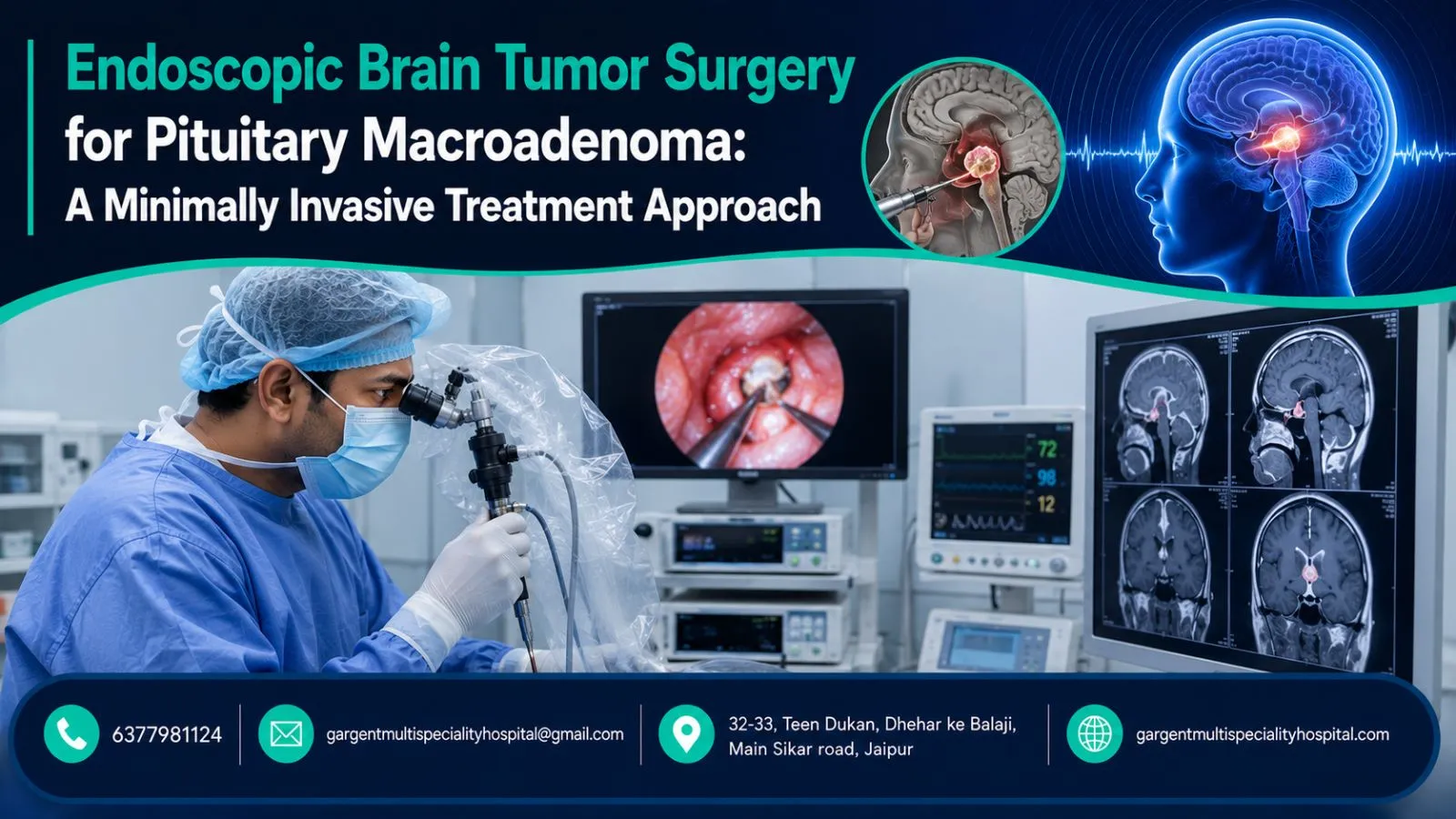
Endoscopic Brain Tumor Surgery is an advanced minimally invasive technique that uses a thin tube equipped with a high-definition camera and specialized instruments to remove tumors. Instead of creating large incisions, surgeons access the tumor through natural pathways, most commonly the nasal cavity.
During the procedure, the endoscope provides a magnified and detailed view of the surgical area. This allows the surgeon to navigate complex anatomical structures and remove the tumor with exceptional precision. As a result, healthy tissues, nerves, and blood vessels are better protected throughout the operation.
Some major benefits of this approach include:
- No skull opening required
- No visible external scars
- Reduced surgical trauma
- Lower risk of complications
- Shorter hospital stay
- Faster recovery
These advantages have made endoscopic surgery a preferred treatment option for many skull base tumors.
Understanding Pituitary Macroadenoma
A Pituitary Macroadenoma is a benign tumor measuring more than one centimeter in size that develops within the pituitary gland. Although non-cancerous, these tumors can grow large enough to compress nearby structures, particularly the optic nerves and surrounding brain tissues.
Patients often experience symptoms gradually, which may delay diagnosis. Common symptoms include:
- Progressive vision loss
- Persistent headaches
- Hormonal imbalance
- Dizziness
- Fatigue and weakness
- Reduced concentration
When left untreated, the tumor can continue to grow and cause increasing neurological and hormonal complications. Therefore, early diagnosis and specialist evaluation play a crucial role in preventing long-term damage.
Patient Case Overview and Diagnosis
A 60-year-old male patient visited the hospital with complaints of gradual vision loss, recurring headaches, and frequent dizziness. Initially, the symptoms were mild and manageable. However, over the following months, they became increasingly severe and began affecting daily activities.
A detailed neurological assessment was performed, followed by an MRI scan. The imaging revealed a large Pituitary Macroadenoma that was compressing the optic nerves. Due to the risk of further vision deterioration, immediate treatment was recommended.
The patient’s clinical timeline included:
- Month 1–2: Mild headaches and dizziness
- Month 3: Noticeable visual disturbances
- Month 4: MRI confirmed Pituitary Macroadenoma
- Month 5: Surgical intervention planned
- Post-Surgery: Significant recovery and symptom improvement
Based on the findings, the medical team recommended Endoscopic Transnasal Brain Tumor Surgery as the safest and most effective treatment option.
Treatment Plan and Surgical Procedure
The primary objective of treatment was complete tumor removal while preserving vision and protecting nearby neurological structures. After careful evaluation, surgeons selected the Endoscopic Transnasal Skull Base Approach.
The procedure began by accessing the tumor through the patient’s natural nasal passage. This approach eliminated the need for skull opening and significantly reduced surgical trauma. A high-definition endoscope was then used to provide clear visualization of the tumor and surrounding structures.
Using specialized microsurgical instruments, the surgical team carefully removed the tumor while protecting critical nerves and blood vessels. Continuous visualization throughout the procedure ensured precision and safety. The tumor was successfully excised, and pressure on the optic nerves was relieved.
The surgery was completed within approximately one to two hours and was performed without major complications.
Recovery and Post-Operative Care
One of the biggest advantages of endoscopic brain surgery is its faster recovery compared to traditional open brain surgery. Since there are no large incisions or skull openings, patients typically experience less discomfort and a shorter hospital stay.
Following surgery, the patient underwent routine neurological monitoring and postoperative assessments. Care included:
- Neurological examinations
- Nasal cavity healing assessment
- Vision monitoring
- Hormonal evaluation
- Follow-up MRI scans
The patient remained stable throughout recovery and demonstrated excellent progress during follow-up visits.
Outcomes and Benefits of Endoscopic Brain Tumor Surgery
The surgery resulted in significant improvements in the patient’s overall health and quality of life. Relief of pressure on the optic nerves contributed to noticeable recovery of vision, while headaches and dizziness gradually resolved.
Key benefits observed included:
- Improved eyesight
- Resolution of neurological symptoms
- No visible surgical scars
- Reduced hospital stay
- Faster return to daily activities
- Lower risk of complications
Follow-up evaluations one week, one month, and three months after surgery showed continued improvement with no evidence of tumor recurrence.
Why Endoscopic Surgery is Preferred for Skull Base Tumors
Compared with traditional craniotomy, Endoscopic Brain Tumor Surgery offers several advantages that improve both patient comfort and clinical outcomes. The minimally invasive nature of the procedure reduces tissue disruption and allows surgeons to access difficult areas with greater precision.
For tumors such as Pituitary Macroadenoma, this approach provides:
- Enhanced visualization
- Better surgical accuracy
- Reduced blood loss
- Faster healing
- Lower infection risk
- Improved cosmetic outcomes
Because of these benefits, endoscopic surgery has become the preferred treatment option for many skull base tumors worldwide.
Expert Surgical Care
The procedure was performed by Dr. Prateek Garg, a highly experienced surgeon specializing in advanced endoscopic and skull base procedures. With more than 13 years of experience and over 16,500 successful surgeries, he has extensive expertise in managing complex cases using minimally invasive techniques.
At GARG ENT & Multispeciality Hospital, patients benefit from advanced technology, personalized treatment plans, and comprehensive postoperative care designed to achieve the best possible outcomes.
Conclusion
This case highlights the effectiveness of Endoscopic Brain Tumor Surgery in treating Pituitary Macroadenoma with minimal surgical trauma and excellent functional outcomes. By utilizing advanced endoscopic techniques, surgeons can remove tumors safely while preserving critical neurological functions and reducing recovery time.
Patients experiencing symptoms such as vision loss, persistent headaches, dizziness, or hormonal disturbances should seek medical evaluation without delay. Early diagnosis and timely treatment can significantly improve outcomes and help patients return to a healthy and active life.
Frequently Asked Questions
1. What is brain tumor surgery through the nose?
It is a minimally invasive procedure that allows surgeons to remove certain brain tumors through the nasal passages without opening the skull.
2. Is endoscopic brain tumor surgery safe?
Yes. When performed by experienced specialists, endoscopic surgery is considered highly safe and offers excellent outcomes with fewer complications.
3. How long does recovery take after surgery?
Most patients recover faster than with traditional open surgery and can resume normal daily activities within a few weeks.
4. Will there be visible scars after surgery?
No. Since the procedure is performed through the nasal cavity, there are no external incisions or visible scars.
5. Can vision improve after pituitary tumor surgery?
In many cases, vision improves significantly once pressure on the optic nerves is relieved through successful tumor removal.