Ear wax is a natural substance produced by the ear canal to protect the ears from dust, bacteria, and foreign particles. While ear wax is beneficial in normal amounts, excessive buildup can lead to discomfort, hearing problems, and ear blockage. Many people search for how to remove ear wax safely, but using incorrect methods can sometimes cause more harm than good.
Understanding the proper techniques for ear cleaning and knowing when professional care is needed can help maintain healthy ears and prevent complications. This guide explains the safest approaches to ear cleaning, methods to avoid, and when to seek ENT care.
What Is Ear Wax and Why Does It Build Up in the Ear Canal?
Ear wax, medically known as cerumen, plays an important role in maintaining ear health. Under normal circumstances, the ear naturally cleans itself by moving wax toward the outer ear canal.
However, certain factors can interfere with this process and lead to wax accumulation.
The Important Role of Ear Wax in Ear Health
Before considering ear wax removal, it is important to understand why ear wax exists.
Ear wax helps by:
- Trapping dust and debris
- Preventing bacterial growth
- Protecting the ear canal skin
- Lubricating the ear passage
- Reducing the risk of infections
In most cases, ear wax does not need to be removed because the body naturally eliminates excess wax over time.
Problems arise only when wax becomes excessive or impacted.
Common Causes of Excess Ear Wax Buildup
Several factors can increase the likelihood of wax accumulation and blockage.
Common causes include:
- Narrow ear canals
- Excessive wax production
- Frequent use of earphones
- Hearing aid use
- Cotton bud usage
- Aging-related changes
People who frequently insert objects into their ears often push wax deeper, increasing the risk of ear wax blockage.
Understanding these causes can help prevent future buildup.
Signs and Symptoms of Ear Wax Blockage
Excessive wax can cause a variety of symptoms that affect hearing and comfort.
Common signs include:
- Reduced hearing
- Ear fullness
- Ringing in the ears
- Ear discomfort
- Dizziness
- Itching inside the ear
When symptoms become persistent or severe, professional evaluation may be necessary to determine whether wax buildup is the cause.
Ignoring significant blockage can sometimes lead to infection or worsening hearing difficulties.
How to Remove Ear Wax Safely at Home
Many mild cases of wax buildup can be managed safely at home. However, it is important to use methods that soften and remove wax without damaging the ear canal or eardrum.
Knowing the best way to remove ear wax can reduce the risk of complications.
Using Ear Wax Removal Drops Correctly
One of the safest and most effective home treatments involves using ear wax softening drops.
These products may contain:
- Carbamide peroxide
- Hydrogen peroxide
- Saline-based solutions
- Mineral oil
To use them safely:
- Follow product instructions carefully.
- Tilt your head to allow drops into the ear canal.
- Keep the ear tilted for several minutes.
- Allow softened wax to drain naturally.
This method often works well for mild to moderate wax buildup and is commonly recommended before professional treatment.
Warm Water Irrigation for Ear Wax Removal
Warm water irrigation may help loosen softened wax and assist with ear cleaning wax removal when performed carefully.
Basic steps include:
- Using lukewarm water
- Applying gentle pressure
- Avoiding forceful flushing
- Drying the ear afterward
Irrigation should never be attempted if you have:
- An eardrum perforation
- Ear tubes
- Active ear infection
- Recent ear surgery
Individuals unsure whether irrigation is safe should consult a healthcare professional before attempting the procedure.
Natural Methods That May Help Soften Ear Wax
Some natural remedies may help soften wax and support its natural removal.
Options include:
- Warm olive oil
- Mineral oil
- Glycerin drops
These methods can be useful for people wondering how can i remove ear wax without immediately seeking medical treatment.
However, natural remedies should only be used when there is no history of ear disease, infection, or eardrum injury.
Persistent symptoms still require medical evaluation.
Ear Wax Removal Methods You Should Never Try
Although many ear cleaning techniques are popular online, some methods can damage the ear canal and create serious complications.
Understanding unsafe practices is just as important as knowing how to safely remove ear wax.
Why Cotton Buds Can Push Wax Deeper
Cotton buds remain one of the most common causes of impacted ear wax.
Problems caused by cotton buds include:
- Pushing wax deeper
- Ear canal injuries
- Increased blockage
- Eardrum damage
- Infection risk
Rather than removing wax, cotton buds often compress it further into the canal.
This frequently leads to hard ear wax removal becoming necessary through professional treatment.
The Risks of Ear Candling for Wax Removal
Ear candling is sometimes promoted as a natural cleaning method, but medical evidence does not support its effectiveness.
Potential risks include:
- Burns
- Ear canal injury
- Wax candle residue
- Eardrum perforation
- Infection
Most ENT specialists strongly advise against ear candling due to safety concerns and lack of proven benefit.
Patients should choose evidence-based treatment methods instead.
Dangerous DIY Ear Cleaning Tools to Avoid
Various online devices claim to provide quick wax removal but can be hazardous when used incorrectly.
Avoid:
- Sharp instruments
- Metal picks
- Hairpins
- Homemade suction devices
- Unapproved cleaning gadgets
These tools increase the risk of injury and may worsen blockage rather than solve the problem.
Safe treatment always prioritizes protecting the delicate structures of the ear.
When Professional Ear Wax Removal Is the Best Option
Some cases of wax buildup cannot be safely managed at home. Professional treatment provides a safer and more effective solution for significant blockage.
ENT specialists have specialized equipment designed to remove wax without damaging the ear.
Symptoms That Require ENT Evaluation
Medical attention is recommended when symptoms become severe or persistent.
Seek evaluation if you experience:
- Significant hearing loss
- Persistent ear pain
- Ear discharge
- Dizziness
- Recurrent wax buildup
- Complete ear blockage
These symptoms may indicate the need for impacted ear wax removal or evaluation for another underlying ear condition.
Early treatment can prevent complications and restore hearing more quickly.
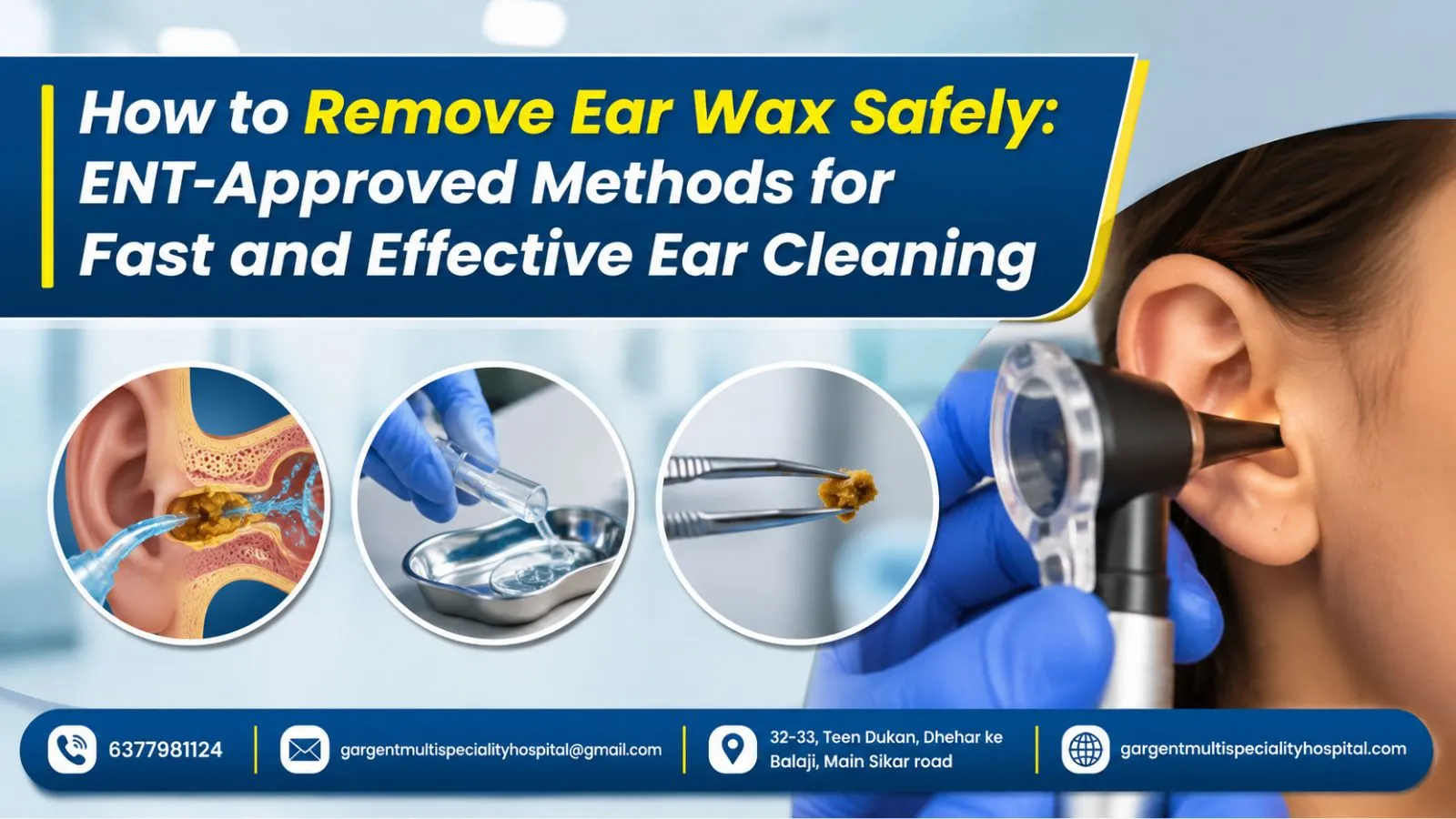
How ENT Specialists Remove Impacted Ear Wax
Many patients wonder how doctors remove ear wax safely.
Common professional methods include:
- Microsuction
- Curette removal
- Controlled irrigation
- Endoscopic ear cleaning
ENT ear wax removal is performed using magnification and specialized instruments, allowing precise treatment with minimal discomfort.
The chosen method depends on the amount, location, and consistency of the wax.
Professional removal is generally quick and highly effective.
Benefits of Professional Ear Cleaning Treatment
There are several advantages to professional ear wax removal treatment, particularly for individuals with recurrent or severe wax buildup.
Benefits include:
- Immediate symptom relief
- Improved hearing
- Reduced infection risk
- Safe removal techniques
- Accurate diagnosis of other ear problems
Professional treatment also allows ENT specialists to identify conditions that may mimic wax blockage, such as infections or hearing disorders.
For many patients, specialist care provides the safest and most reliable solution.
Conclusion
Ear wax is an important part of the body’s natural ear protection system, but excessive buildup can lead to discomfort, hearing difficulties, and blockage. Understanding ways to remove ear wax safely can help prevent complications and support long-term ear health.
While ear drops and gentle irrigation may help in mild cases, unsafe methods such as cotton buds and ear candling should be avoided. Persistent symptoms, hearing loss, or impacted wax often require professional care.
At Garg ENT & Multispeciality Hospital, experienced ENT specialists provide safe and effective ear cleaning services using advanced techniques to restore comfort and hearing while protecting overall ear health.
FAQs
1. What is the best way to remove ear wax safely?
The safest methods include approved ear wax softening drops and professional ENT removal when necessary.
2. Can I remove ear wax at home?
Yes, mild wax buildup may be managed with ear drops or gentle irrigation, provided there are no ear infections or eardrum problems.
3. Why should I avoid cotton buds?
Cotton buds often push wax deeper into the ear canal and can cause blockage, injury, or infection.
4. How do ENT specialists remove impacted ear wax?
ENT specialists commonly use microsuction, curettes, or controlled irrigation to remove wax safely and effectively.
5. When should I see a doctor for ear wax blockage?
You should seek medical attention if you experience hearing loss, persistent pain, dizziness, ear discharge, or recurrent wax buildup.