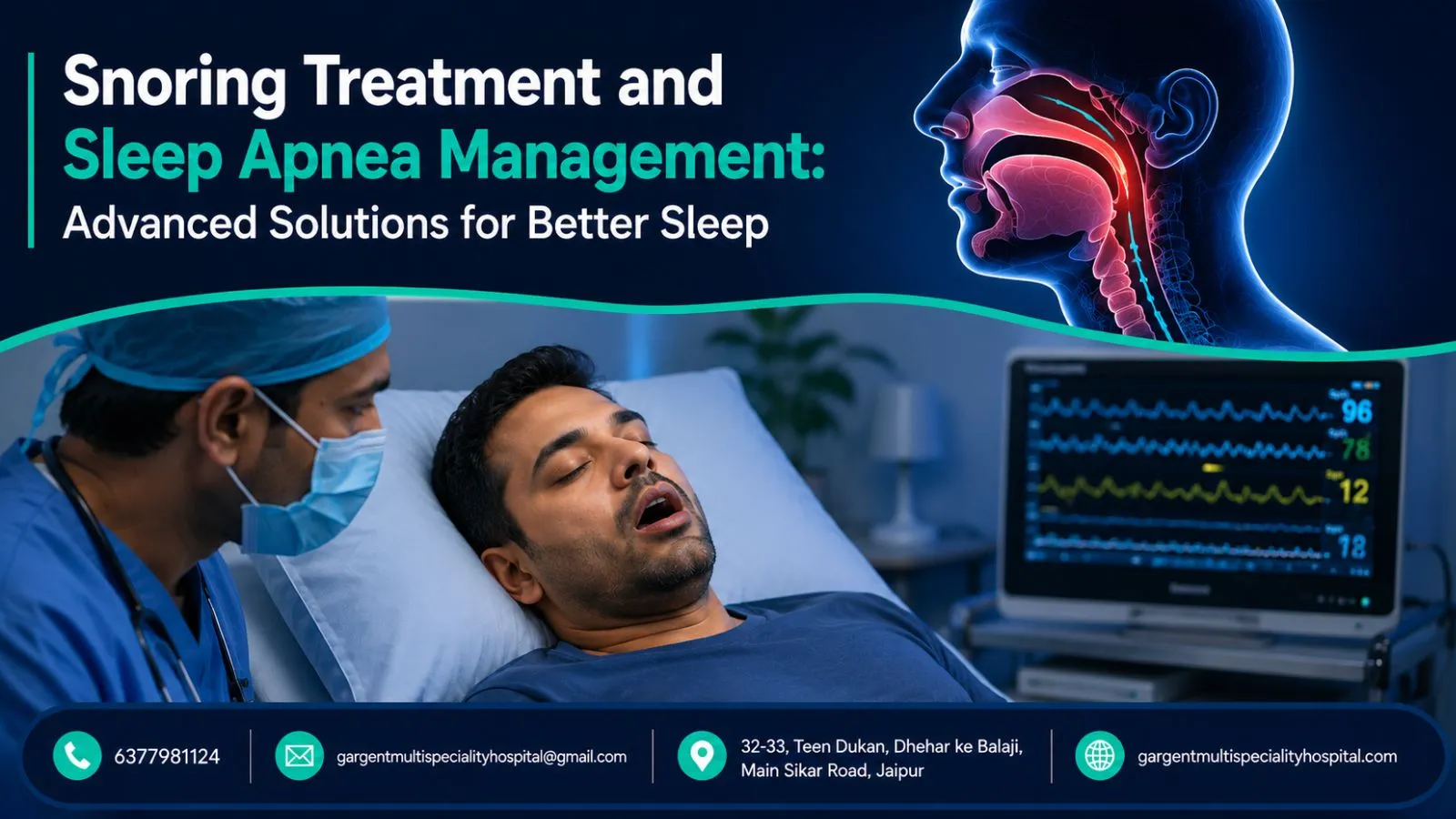
Snoring is one of the most common sleep-related conditions and occurs when airflow is partially obstructed during sleep, causing the tissues of the throat and airway to vibrate. While occasional snoring may not be a serious concern, persistent and loud snoring can indicate an underlying sleep disorder such as Obstructive Sleep Apnea (OSA).
Many people consider snoring a simple nuisance, but untreated sleep-related breathing disorders can have a significant impact on overall health. Poor sleep quality, daytime fatigue, reduced concentration, breathing difficulties, and cardiovascular complications are some of the potential consequences of chronic snoring and sleep apnea.
At Garg ENT Multispeciality Hospital, patients receive comprehensive evaluation and advanced treatment for snoring and sleep apnea under the guidance of Dr. Prateek Garg. Through modern diagnostic techniques and personalized treatment plans, patients can achieve better sleep, improved breathing, and enhanced quality of life.
What is Snoring?
Snoring occurs when airflow is partially blocked as it passes through the nose, mouth, or throat during sleep. The restricted airflow causes surrounding tissues to vibrate, producing the characteristic snoring sound.
Although snoring can affect individuals of any age, certain factors increase the likelihood of developing the condition. In some cases, snoring may occur occasionally due to temporary nasal congestion or poor sleeping posture. However, persistent snoring often requires medical evaluation to identify the underlying cause.
Common Causes of Snoring
Several factors can contribute to airway narrowing during sleep, including:
- Nasal blockage or congestion
- Enlarged tonsils or adenoids
- Obesity and excess neck tissue
- Deviated nasal septum
- Poor sleeping posture
- Relaxation of throat muscles during sleep
- Naturally narrow airway structures
When snoring is accompanied by breathing interruptions, excessive daytime sleepiness, or poor sleep quality, it may be associated with Obstructive Sleep Apnea.
Understanding Obstructive Sleep Apnea
Obstructive Sleep Apnea (OSA) is a sleep disorder characterized by repeated episodes of partial or complete airway blockage during sleep. These interruptions can occur multiple times throughout the night, reducing oxygen levels and disrupting normal sleep patterns.
Many patients with sleep apnea are unaware of the condition because the breathing interruptions occur while they are asleep. Family members often notice loud snoring, choking sounds, or pauses in breathing before the patient seeks medical attention.
Common symptoms of sleep apnea include:
- Loud and chronic snoring
- Breathing pauses during sleep
- Excessive daytime fatigue
- Morning headaches
- Poor concentration
- Irritability and mood changes
- Restless sleep
Early diagnosis and treatment are essential to prevent long-term health complications.
Clinical Scenario
A patient visited Garg ENT Multispeciality Hospital with complaints of loud snoring, disturbed sleep, excessive daytime fatigue, and morning headaches. Family members also reported frequent pauses in breathing during sleep and noticeable sleep disturbances throughout the night.
The symptoms had gradually worsened over time, affecting the patient’s daily routine, productivity, and overall quality of life. Due to the severity of the symptoms, a detailed ENT and sleep evaluation was recommended.
Following a comprehensive assessment by Dr. Prateek Garg, the patient was diagnosed with severe Obstructive Sleep Apnea. A personalized treatment plan was then developed to address the underlying airway obstruction and improve sleep quality.
Key Symptoms of Snoring and Sleep Apnea
Recognizing the warning signs of sleep-disordered breathing is important for early intervention and effective treatment.
Loud and Persistent Snoring
Continuous loud snoring is one of the most common symptoms. It often disrupts sleep not only for the affected individual but also for family members and sleeping partners.
Breathing Pauses During Sleep
Repeated interruptions in breathing are a hallmark sign of sleep apnea. These pauses may last several seconds and can occur numerous times throughout the night.
Daytime Fatigue and Sleepiness
Poor sleep quality often leads to excessive daytime drowsiness, reduced concentration, and lower productivity. Many patients struggle with routine activities because of persistent fatigue.
Nasal Blockage and Breathing Difficulties
Structural issues within the nose or throat can contribute to airway narrowing and worsen snoring symptoms. Proper evaluation is necessary to identify any underlying anatomical problems.
Diagnosis and Evaluation
Accurate diagnosis is the foundation of successful treatment. At Garg ENT Multispeciality Hospital, patients undergo a detailed assessment to determine the cause and severity of their condition.
Diagnostic Evaluation May Include
- Comprehensive ENT examination
- Airway assessment
- Nasal and throat evaluation
- Sleep study (Polysomnography)
- Assessment of breathing patterns during sleep
These investigations help specialists identify airway obstruction, confirm the presence of sleep apnea, and develop an appropriate treatment strategy.
Sleep studies are particularly useful because they provide detailed information about oxygen levels, breathing interruptions, heart rate, and sleep quality throughout the night.
Treatment Options for Snoring and Sleep Apnea
Treatment depends on the severity of symptoms and the underlying cause of airway obstruction. A combination of lifestyle changes, medical therapies, and advanced procedures may be recommended.
Lifestyle Modifications
For mild cases, simple lifestyle adjustments can significantly improve symptoms and reduce snoring.
Recommended measures include:
- Weight management
- Regular physical activity
- Sleeping on the side instead of the back
- Avoiding alcohol before bedtime
- Smoking cessation
- Maintaining healthy sleep habits
These changes can help reduce airway collapse and improve overall sleep quality.
CPAP and BiPAP Therapy
Continuous Positive Airway Pressure (CPAP) therapy is considered one of the most effective treatments for moderate to severe sleep apnea.
CPAP therapy works by delivering a continuous stream of air through a mask, helping keep the airway open during sleep.
Benefits include:
- Reduced snoring
- Improved breathing
- Better sleep quality
- Increased daytime energy
- Lower risk of sleep apnea complications
In some cases, BiPAP therapy may be recommended depending on individual patient needs.
Nasal and Airway Treatments
Patients with nasal obstruction or structural airway problems may benefit from targeted treatments designed to improve airflow.
These treatments may include:
- Medical therapy
- Nasal congestion management
- Allergy treatment
- Correction of structural abnormalities
Improved nasal breathing often contributes to better sleep and reduced snoring.
Advanced Surgical Treatment
For patients with severe airway obstruction that does not respond adequately to conservative measures, surgical intervention may be considered.
Surgical procedures may help:
- Widen the airway
- Correct anatomical abnormalities
- Improve airflow during sleep
- Reduce dependence on long-term therapy
The treatment plan is individualized based on the patient’s anatomy and severity of symptoms.
Why Choose Garg ENT Multispeciality Hospital?
Managing snoring and sleep apnea requires specialized expertise and comprehensive evaluation. At Garg ENT Multispeciality Hospital, patients benefit from advanced diagnostic facilities and evidence-based treatment approaches.
Key advantages include:
- Experienced ENT specialist care
- Advanced sleep disorder evaluation
- Modern airway assessment techniques
- Personalized treatment plans
- Comprehensive follow-up care
Under the guidance of Dr. Prateek Garg, patients receive focused treatment aimed at achieving long-term improvement in breathing and sleep quality.
Duration and Recovery
The treatment timeline varies depending on the chosen management approach.
Typical Treatment Overview
- Consultation Duration: 20–40 minutes
- Sleep Study: Usually completed overnight
- CPAP Adaptation: Gradual adjustment period
- Surgical Recovery: Depends on the procedure performed
Most patients notice gradual improvements in sleep quality, breathing patterns, and daytime energy levels following treatment.
Benefits of Snoring Treatment
Effective treatment offers several important health benefits that extend beyond reducing snoring sounds.
Better Sleep Quality
Patients experience deeper and more restful sleep, allowing the body to recover properly during the night.
Improved Breathing
Enhanced airflow reduces breathing interruptions and improves oxygen delivery throughout the body.
Reduced Daytime Fatigue
Better sleep contributes to increased energy levels, improved concentration, and greater productivity.
Long-Term Health Benefits
Managing sleep apnea can reduce the risk of complications associated with untreated breathing disorders, including cardiovascular problems and chronic fatigue.
Conclusion
Chronic snoring should never be ignored, especially when accompanied by breathing pauses, daytime fatigue, or poor sleep quality. These symptoms may indicate Obstructive Sleep Apnea, a condition that requires timely diagnosis and appropriate treatment.
Modern treatment options, including lifestyle modification, CPAP therapy, airway management, and advanced surgical procedures, can significantly improve breathing and sleep quality. Early intervention not only relieves symptoms but also helps prevent long-term health complications.
At Garg ENT Multispeciality Hospital, Dr. Prateek Garg provides comprehensive evaluation and personalized treatment solutions designed to help patients achieve healthier sleep, improved breathing, and a better quality of life.
Frequently Asked Questions
1. What is the most effective treatment for snoring?
The best treatment depends on the underlying cause. Options may include lifestyle modifications, CPAP therapy, medical treatment, or surgical intervention.
2. Is snoring always a sign of sleep apnea?
No. While snoring is a common symptom of sleep apnea, not everyone who snores has the condition. A proper evaluation is necessary for diagnosis.
3. How is sleep apnea diagnosed?
Sleep apnea is typically diagnosed through a sleep study, which monitors breathing patterns, oxygen levels, and sleep quality during the night.
4. Can sleep apnea be treated without surgery?
Yes. Many patients successfully manage sleep apnea with CPAP therapy, lifestyle modifications, and medical treatment without requiring surgery.
5. What happens if sleep apnea is left untreated?
Untreated sleep apnea may contribute to chronic fatigue, poor concentration, high blood pressure, heart disease, and reduced quality of life.