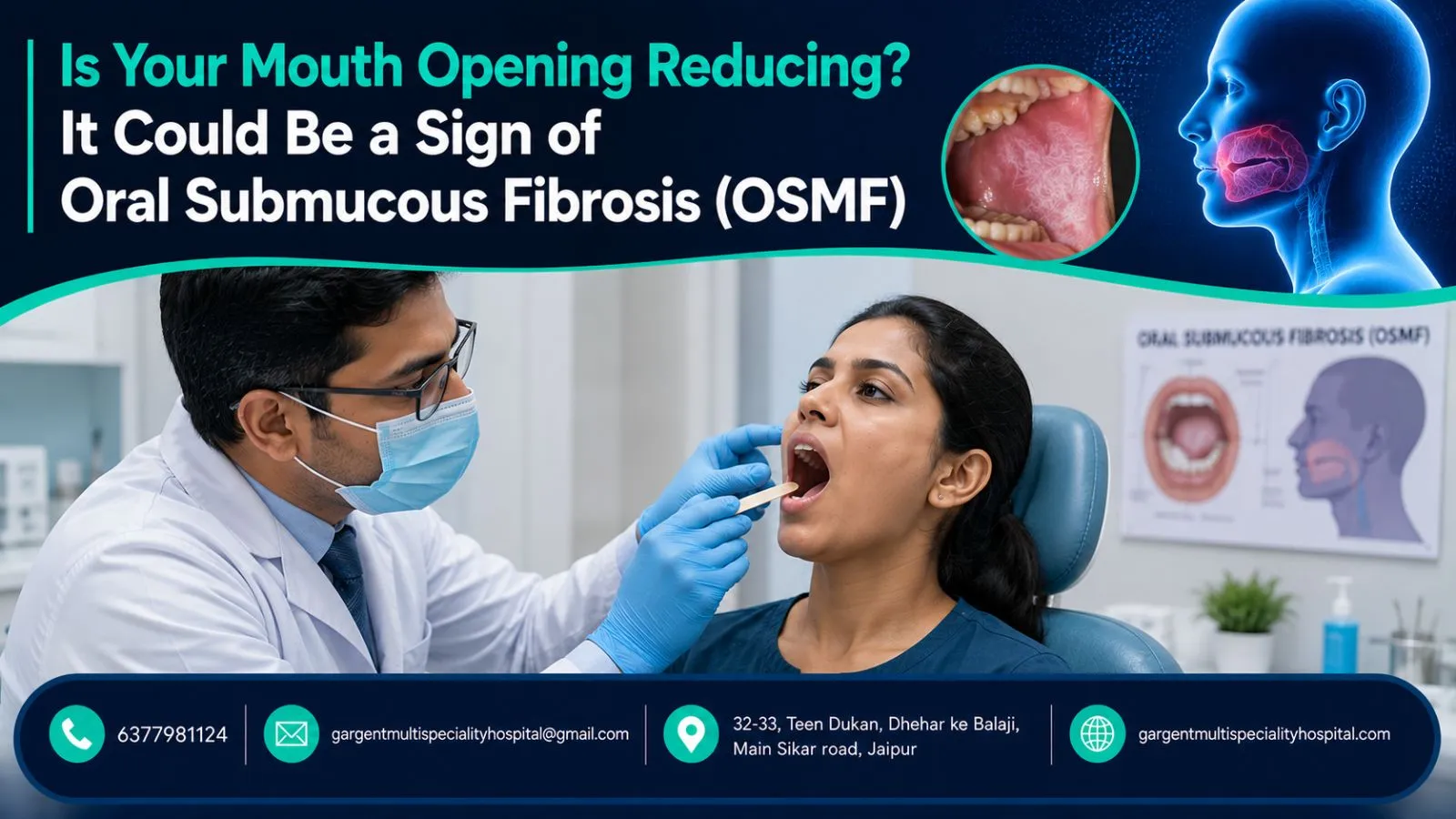
Many people ignore difficulty in opening their mouth. They often think it is a temporary problem that will improve on its own. However, if your mouth opening has gradually reduced over time, it should not be ignored. This is especially important if you regularly consume gutkha, tobacco, paan masala, or supari.
One possible reason for reduced mouth opening is Oral Submucous Fibrosis (OSMF). It is a chronic condition that affects the tissues inside the mouth and makes them stiff. As the disease progresses, normal activities such as eating, speaking, and swallowing can become difficult.
OSMF is also considered a potentially malignant disorder. This means it can increase the risk of oral cancer if left untreated. Early diagnosis and timely treatment can help control the condition and improve quality of life. Understanding the warning signs is the first step toward protecting your oral health.
Quick Answer
If your mouth is opening less than before and you regularly consume gutkha, tobacco, paan masala, or supari, you may be developing Oral Submucous Fibrosis (OSMF).
This condition causes gradual stiffening of the tissues inside the mouth. As a result, mouth opening becomes restricted and daily activities become difficult. Early medical evaluation can help slow the progression of the disease and reduce complications.
What Is Oral Submucous Fibrosis (OSMF)?
Oral Submucous Fibrosis is a long-term condition that affects the lining of the mouth. It causes the oral tissues to become thick, stiff, and less flexible. Over time, scar-like fibrous bands develop inside the cheeks and other areas of the mouth.
As these tissues lose flexibility, mouth opening gradually decreases. Many patients first notice that they are unable to open their mouth as wide as before. Others experience discomfort while eating spicy foods or chewing meals.
The condition is most commonly linked to the use of areca nut products such as supari, gutkha, and paan masala. Tobacco consumption further increases the risk and may worsen the severity of the disease.
Why Does OSMF Develop?
Several habits can contribute to the development of Oral Submucous Fibrosis. Continuous irritation inside the mouth causes inflammation and tissue damage. Over time, this leads to fibrosis and reduced mouth opening.
The most common causes include:
- Gutkha consumption
- Supari (areca nut) chewing
- Tobacco use
- Paan masala consumption
- Poor oral health habits
- Nutritional deficiencies
Among these factors, areca nut is considered one of the biggest contributors to OSMF in India.
Common Causes of Reduced Mouth Opening
Reduced mouth opening does not happen overnight. In most cases, it develops gradually over months or years. Understanding the causes can help identify the problem early.
Gutkha Consumption
Gutkha contains areca nut, tobacco, and several chemical additives. These substances damage the oral tissues and increase the risk of fibrosis.
People who consume gutkha regularly often experience burning sensations, ulcers, and stiffness inside the mouth before noticing reduced mouth opening.
Supari (Areca Nut)
Many people believe that supari is harmless because it is commonly available. However, medical studies have shown that areca nut is one of the leading causes of OSMF.
Regular use can slowly damage the tissues inside the mouth and reduce their elasticity.
Tobacco Chewing
Tobacco causes chronic irritation of the oral lining. It also increases the risk of oral cancer and other serious oral diseases.
When combined with areca nut products, the harmful effects become even greater.
Paan Masala
Paan masala products often contain ingredients that contribute to tissue changes inside the mouth. Long-term use can lead to fibrosis and restricted jaw movement.
Early Symptoms of OSMF
Recognizing early symptoms is important because treatment is more effective during the initial stages of the disease.
Burning Sensation While Eating
Many patients notice a burning feeling while eating spicy, hot, or acidic foods. This is often one of the first symptoms of OSMF.
Tightness Inside the Mouth
The cheeks may feel tight or less flexible than before. Some patients describe it as a stretching sensation inside the mouth.
Recurrent Mouth Ulcers
Frequent ulcers, soreness, and irritation are common during the early stages of the condition.
Reduced Mouth Opening
Gradual reduction in mouth opening is one of the most important warning signs. Patients often notice that yawning, eating, or visiting the dentist becomes more difficult.
Advanced Symptoms You Should Not Ignore
As Oral Submucous Fibrosis progresses, symptoms become more noticeable and start affecting everyday activities.
Common advanced symptoms include:
- Significant restriction in mouth opening
- Difficulty chewing food
- Pain while swallowing
- Difficulty speaking clearly
- Reduced tongue movement
- White patches inside the mouth
- Pale oral tissues
- Fibrous bands inside the cheeks
These symptoms require prompt medical evaluation and treatment.
Can Reduced Mouth Opening Be a Sign of Oral Cancer?
Not every case of reduced mouth opening means cancer. However, OSMF is a potentially malignant condition. This means that the risk of oral cancer is higher compared to the general population.
You should seek immediate medical attention if you notice:
- White patches inside the mouth
- Red patches that do not heal
- Persistent mouth ulcers
- Unexplained bleeding
- Continuous pain
- Difficulty swallowing
- A lump in the mouth or neck
Early diagnosis greatly improves treatment outcomes and helps detect serious problems before they become advanced.
When Should You See an ENT Specialist?
Many people wait too long before seeking medical advice. Unfortunately, delayed treatment can allow the disease to progress further.
You should consult an ENT specialist if:
- Your mouth opening is gradually decreasing
- You consume gutkha, tobacco, paan masala, or supari
- You experience burning while eating
- Speaking or chewing has become difficult
- You have persistent ulcers or oral irritation
- You notice unusual patches inside the mouth
Early consultation can help prevent long-term complications and preserve normal oral function.
How Is OSMF Diagnosed?
Doctors use several methods to diagnose Oral Submucous Fibrosis and determine its severity.
Clinical Examination
The oral cavity is carefully examined for tissue changes, fibrous bands, ulcers, and signs of stiffness.
Mouth Opening Measurement
The doctor measures how wide the mouth can open. This helps assess the severity of restriction and monitor treatment progress.
Oral Cancer Screening
If suspicious patches or lesions are present, further evaluation may be recommended.
Biopsy
In selected cases, a small tissue sample may be taken for laboratory examination to confirm the diagnosis.
Treatment Options for OSMF
Treatment focuses on controlling symptoms, improving mouth opening, and preventing disease progression.
Stop Gutkha and Tobacco Immediately
The most important step is completely stopping:
- Gutkha
- Tobacco
- Supari
- Paan masala
Continuing these habits can worsen the disease and reduce treatment effectiveness.
Medications and Nutritional Support
Doctors may prescribe:
- Antioxidants
- Vitamin supplements
- Anti-inflammatory medicines
- Supportive nutritional therapy
These treatments help improve tissue health and reduce inflammation.
Mouth Opening Exercises
Regular stretching exercises can improve jaw mobility and help maintain mouth opening.
Patients are often advised to perform these exercises consistently for the best results.
Advanced Surgical Treatment
Patients with severe restriction may require surgery. Surgical treatment helps release fibrous bands and improve mouth opening.
The choice of treatment depends on the severity of the disease and the patient’s condition.
Can OSMF Be Prevented?
Yes. In many cases, Oral Submucous Fibrosis can be prevented through lifestyle changes and avoidance of harmful habits.
Prevention Tips
Follow these simple steps:
- Avoid gutkha completely
- Stop chewing tobacco
- Avoid supari products
- Limit paan masala consumption
- Maintain good oral hygiene
- Eat a healthy and balanced diet
- Visit a specialist regularly
- Seek treatment when symptoms first appear
Prevention is always easier and more effective than treatment.
Expert Insight
Many patients seek treatment only after severe restriction in mouth opening has developed. At this stage, the disease may already be affecting normal eating and speaking functions.
Early diagnosis provides the best opportunity to control disease progression. Patients who stop harmful habits early and follow medical advice generally experience better outcomes and improved oral function.
Conclusion
Reduced mouth opening should never be ignored. If you regularly consume gutkha, tobacco, paan masala, or supari, this symptom could be an early warning sign of Oral Submucous Fibrosis (OSMF).
The condition can affect eating, speaking, and overall quality of life. It may also increase the risk of oral cancer if left untreated. Fortunately, early diagnosis and timely treatment can help manage symptoms and slow disease progression.
If you notice persistent burning sensations, mouth stiffness, or difficulty opening your mouth, consult an ENT specialist as soon as possible. Taking action early can protect your oral health and prevent serious complications in the future.
Frequently Asked Questions
1. Is reduced mouth opening always caused by OSMF?
No. Other conditions affecting the jaw joint, facial muscles, infections, or oral tissues can also cause restricted mouth opening. A proper medical examination is necessary for an accurate diagnosis.
2. Can OSMF lead to oral cancer?
Yes. OSMF is considered a potentially malignant disorder and may increase the risk of oral cancer if not treated properly.
3. Does supari cause OSMF?
Yes. Regular consumption of areca nut (supari) is one of the most common causes of Oral Submucous Fibrosis.
4. Which doctor should I consult for OSMF?
An ENT specialist, oral surgeon, or head and neck specialist can diagnose and manage OSMF effectively.
5. Can OSMF be cured completely?
Early-stage OSMF can often be managed successfully. Stopping harmful habits and following the recommended treatment plan can help slow disease progression and improve oral function.